What is the market actually pricing this week?
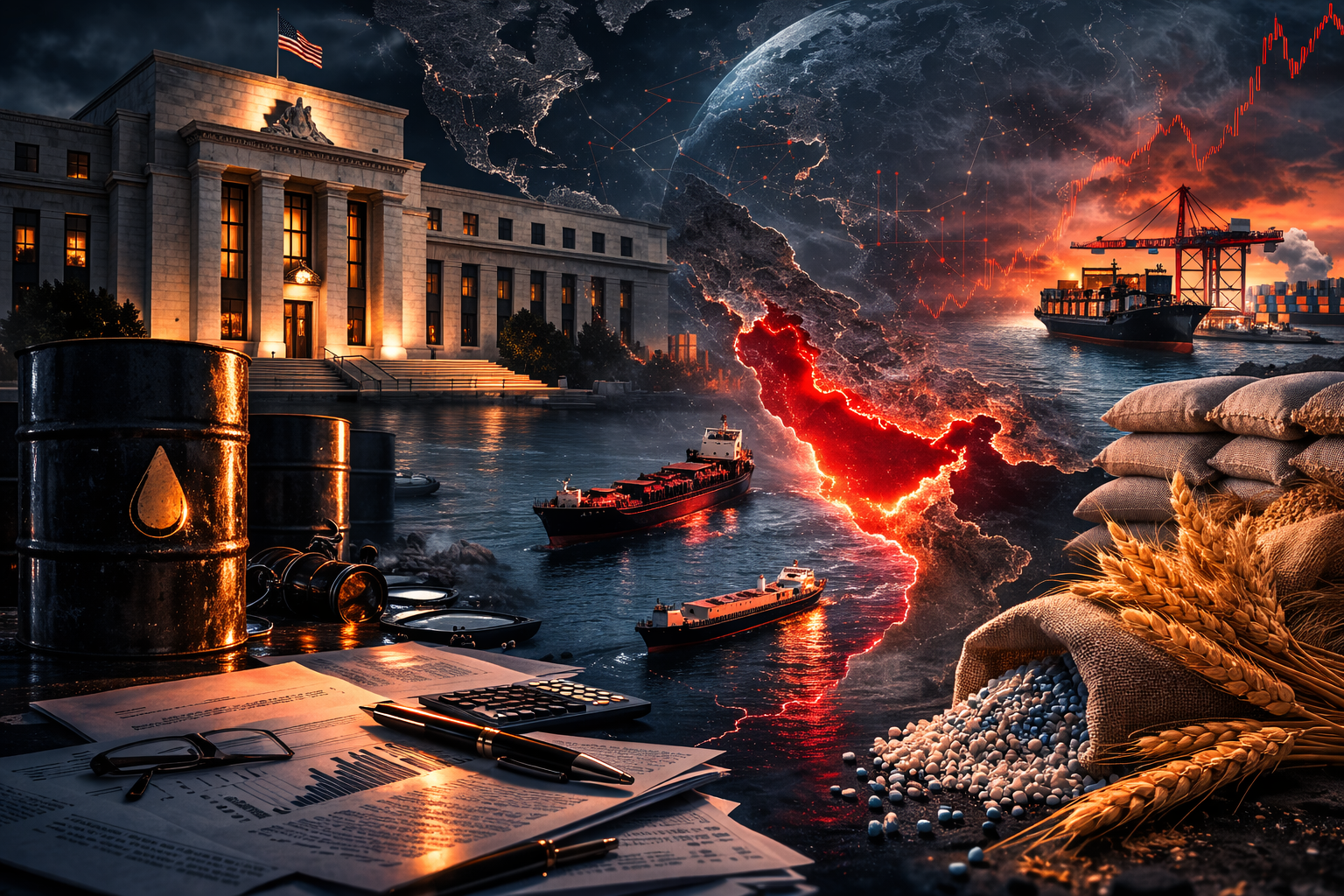
On the calendar, this is a Fed week. In reality, the market is dealing with something larger than the policy decision itself: whether war-driven pressure through energy, logistics, and food can push inflation higher again. The March 17–18 FOMC meeting is the formal centerpiece, and as of Monday, March 16, market pricing was overwhelmingly tilted toward no change in rates. That means the real surprise is unlikely to come from the policy rate itself. It is more likely to come from Powell’s tone, the framing of the projections, and how the Fed chooses to interpret this new cost shock.
That is the real question this week. Will the Fed simply remain cautious, or will it begin to signal, even subtly, that the path to easing is less open than markets had assumed? Because what has changed over the past few weeks is not just the price of oil. Tensions around the Strait of Hormuz have begun to affect energy flows, tanker traffic, refined products, and agricultural inputs at the same time. That turns this from a familiar geopolitical headline into a much more direct macroeconomic problem.
So this is not just another wait-and-see meeting. Rates may stay on hold, but if inflation’s sources are shifting, the Fed’s language may shift with them. And markets are often moved less by the decision itself than by the fear sitting behind it.
Why the Fed will probably stay on hold
The base case is still straightforward: the Fed is very likely to leave rates unchanged. That is not only because markets expect it, but because the current data still give policymakers a reason to wait rather than move. The problem is that the data describe the past, while the market is increasingly worried about what comes next. Oil is rising, bond yields are drifting higher, and central banks globally are being forced to rethink how quickly they can ease if fresh cost pressures are building again.
There is an important distinction here. The Fed may not want to treat an energy shock, by itself, as proof of structurally higher inflation. Central banks usually try to look through the first-round effects of oil spikes. But this time, the risk does not stop at gasoline. Disruptions around Hormuz are now feeding into refined fuels, shipping costs, fertilizer flows, and potentially food prices. That makes the inflation impulse broader and more difficult to dismiss.
What matters, then, is not whether Powell remains “data dependent.” He almost certainly will. What matters is which data the Fed becomes more sensitive to: weaker growth, or the possibility that a new supply shock makes inflation sticky again. Right now, the balance seems to be leaning a bit more toward the second concern.
Why the Strait of Hormuz is not just an oil story this time
The Strait of Hormuz has long existed in market language as a risk factor. Most of the time, it remains just that—a risk factor, a headline, something that briefly moves prices and then fades. What is different now is that the disruption no longer feels theoretical. It is increasingly being treated as a real constraint on trade flows.
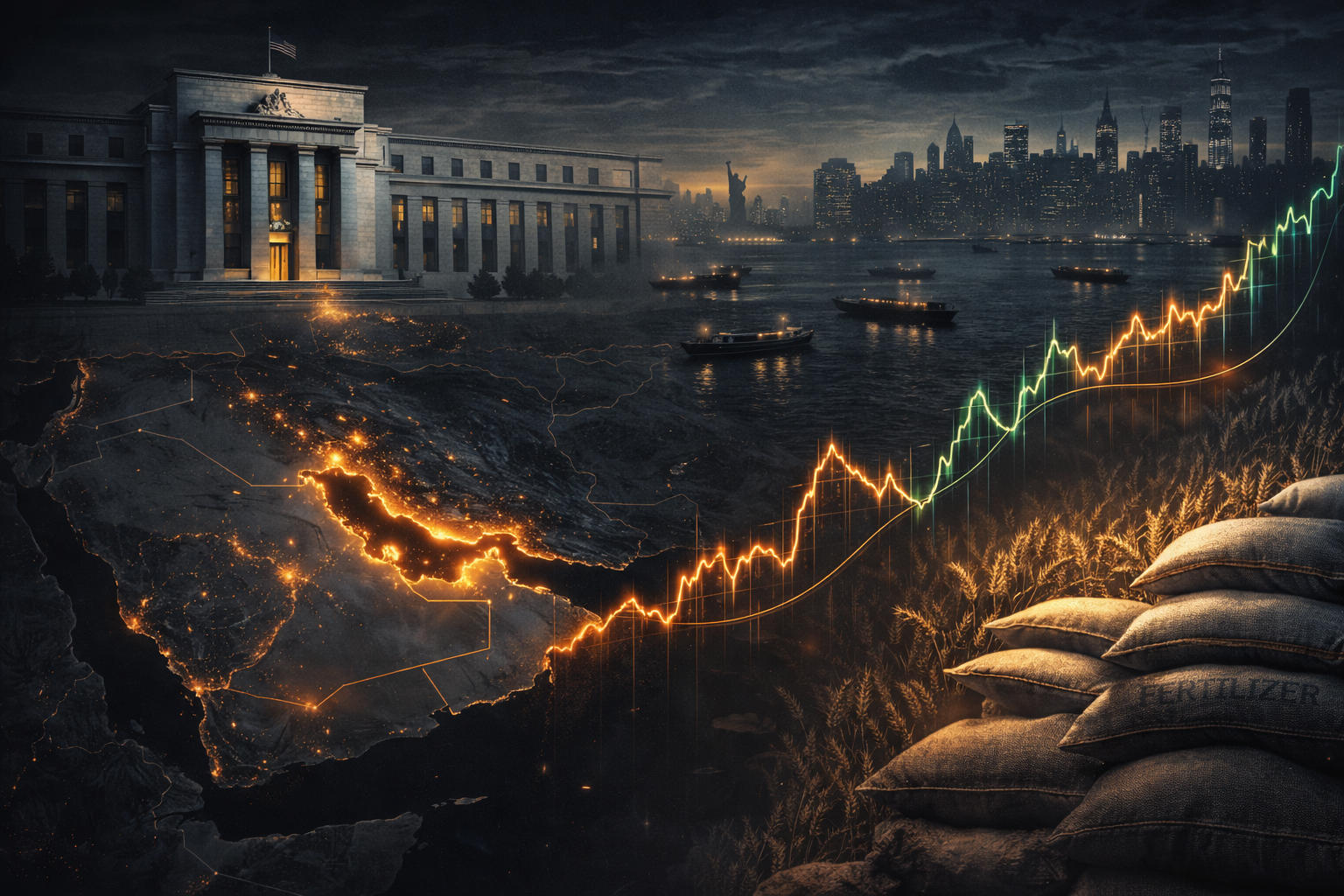
That matters because Hormuz is not simply an energy route. It is one of the pressure points of the global cost structure. Oil and LNG pass through it, but so do petrochemical inputs, refined products, and critical industrial materials. Once traffic is disrupted, the effects do not stay confined to crude. They move into diesel, aviation fuel, freight pricing, insurance premiums, and delivery times.
This is where the macro story becomes more serious. Inflation often reaches the real economy less through the headline commodity itself and more through the second-order effects. Diesel costs matter because trucks move food, consumer goods, and industrial inputs. Jet fuel matters because it affects cargo, tourism, and logistics chains more broadly. Insurance costs matter because they raise the baseline price of trade itself.
In other words, the market is no longer just pricing an energy commodity shock. It is beginning to price a disturbance in the architecture of global costs. And when that happens, inflation stops being just an economic variable. It becomes the balance-sheet language of geopolitics.

Fertilizer and food inflation: the second wave may be here
Energy inflation is visible. Consumers see it at the pump. Food inflation is more deceptive. It usually arrives later, but when it does, it tends to feel more persistent. That is why the fertilizer angle matters so much this week.
The disruption in Hormuz does not only affect oil. It also affects fertilizer flows and the raw materials connected to them. Once fertilizer prices rise, the inflation story changes character. This is no longer simply about fuel. It becomes a problem for farming economics, planting decisions, crop yields, and eventually food affordability.
The chain is simple, but powerful. If fertilizer becomes more expensive, farmers face higher input costs. Some respond by using less fertilizer. Others cut back on planting, delay decisions, or accept lower intensity. Over time, that reduces yields or tightens supply. A few months later, the consumer does not experience this as “fertilizer inflation.” They experience it as more expensive food.
That is what makes this risk so underappreciated. Energy shocks create the first headline. Food inflation often becomes the second, more durable wave. And once food prices start moving meaningfully, central banks become much less comfortable arguing that inflation pressure is temporary.
There is also a wider industrial angle here. Restrictions in this corridor do not affect only fertilizer. They can also disrupt the movement of intermediate goods used across chemicals, metals, manufacturing, and broader industrial supply chains. So the inflation risk is not narrow. It can spread from agriculture into the wider production system.
The distinction is worth stating clearly. Disruptions in Hormuz are affecting the flow of energy and key industrial inputs. Rising fertilizer prices increase the risk of future pressure on food costs. If the conflict persists, what looks like an energy shock today could return in coming months as a broader global inflation problem.
How inflation spreads if the war drags on
The first channel is direct energy. Fuel, electricity, gas, and transport costs rise. The second is logistics. Shipping rates, insurance costs, and delivery delays begin to affect companies’ cost bases. The third is agriculture, where fertilizer, irrigation, transport, and processing costs lift food prices over time. The fourth is expectations, and this is the one central banks fear most.
Once companies begin to believe higher costs are not temporary, they pass them through more aggressively. Once households begin to expect higher prices ahead, wage demands become firmer. Once that process begins, inflation is no longer just imported through commodities. It starts to become embedded domestically.
That is why the market reaction matters. Investors are not responding as if this were a brief commodity wobble. They are reacting as if a supply-driven inflation problem may be rebuilding just as central banks were preparing for a more comfortable disinflation path.
And that is the difficult macro mix. Growth may soften, but inflation may not cooperate. This is the least attractive combination for policymakers: weakening demand on one side, renewed cost pressure on the other.
The quieter fault line: US private credit still matters
The less discussed but arguably deeper risk this week sits in private credit. An energy shock on its own may not cause systemic stress. But if it collides with an already fragile financial pocket, the impact can compound quickly.
The issue with private credit is not simply default risk. It is the combination of opacity, liquidity mismatch, and high-rate refinancing pressure. For years, this market benefited from a narrative of resilience: private lenders stepped in where banks pulled back, and investors treated the asset class as a relatively stable source of yield. That narrative becomes harder to defend when withdrawal pressure rises while underlying credit quality is under strain.
This is why recent reports of gated or capped redemptions are important. They suggest that what appears stable in normal conditions may prove far less liquid when investors actually want cash back. That does not automatically mean crisis. But it does mean the market is being reminded that private credit is not the same thing as daily liquidity, even when products are packaged to feel smoother than the underlying assets really are.
The connection to this week’s Fed story is direct. The longer rates stay high, the greater the refinancing pressure on weaker borrowers. If energy and food-related inflation reduce the Fed’s ability to ease, then private credit stress becomes more than a niche issue. It becomes part of the broader macro transmission mechanism.
Put differently, it is not enough to say oil is rising. It is also necessary to say that persistently high energy prices can keep rates restrictive for longer, and that in turn can expose the hidden pressure points of a leveraged credit system.
What the market reaction is telling us
Markets are not reacting with relief. They are reacting defensively. That matters. When oil rises alongside bond yields and a firmer dollar, the signal is not one of healthy growth optimism. It is a sign that investors are becoming more concerned about inflation risk returning while monetary policy remains constrained.
That kind of price action usually carries a clear message. Markets are beginning to reduce the number of cuts they expect, and they are treating energy risk as something that could alter the policy path rather than simply create temporary noise. Equities, in that environment, face an uncomfortable setup: higher input costs on one side, and limited discount-rate relief on the other.
The market is moving away from an easy easing narrative. Investors are increasingly treating this as a macro regime shift risk, not just a geopolitical headline.
The base case for this week
The base case remains that the Fed leaves rates unchanged on March 18. But that should not be confused with a benign outcome. A hold can still carry a more hawkish tone if the statement and press conference show greater concern about energy, supply chains, and renewed inflation persistence.
The harder scenario is the one in which disruption in Hormuz lasts longer, oil remains elevated, refined products and fertilizer continue to rise, and private credit liquidity stress worsens in the background. In that world, a Fed hold is not dovish. It is a sign of a central bank whose room to maneuver is narrowing.
The more constructive scenario is still possible. Tensions could ease, shipping flows could gradually normalize, oil could retrace, and the fertilizer-food channel might fade before it hardens into a second inflation wave. In that case, a Fed pause could be read as a central bank buying time rather than falling behind the curve.
But as of now, the flow of news does not feel especially reassuring.
Final word: this week is about more than the Fed
The March 18 Fed decision matters, of course. But the real macro story this week is broader. Tension in the Strait of Hormuz is pushing up energy prices. Disruptions in fertilizer and intermediate goods raise the risk of food inflation becoming the next wave. At the same time, the US private credit market is still showing signs of liquidity and default stress beneath the surface.
These do not look like the same story at first glance. But they converge into one. The world may be moving back toward a regime where cost inflation and financial fragility reinforce each other.
So when the Fed speaks on March 18, the important question will not only be what it does. It will be what it now seems to fear. Because sometimes central banks do not change rates, but they do change the story. And this week feels like one of those weeks.


