
The real story is not protein itself, but how protein is being sold
Anyone who has spent time in a grocery store over the past few years has seen the same pattern. Everything is becoming “high protein.” Yogurt is high protein. Cereal is high protein. Pasta is high protein. Snacks are high protein. Even products that were never really associated with protein are now being repackaged around it. This is no longer a niche wellness trend. For food companies, protein has become one of the most effective positioning tools of the decade.
But the investment question starts where the consumer story stops. A strong consumer theme does not automatically translate into a strong equity story. Demand can be real, yet the companies exposed to that demand can produce very different outcomes depending on pricing power, input costs, brand strength, and category economics. That is what makes the protein theme interesting. The opportunity is real, but so is the gap between the businesses that can actually monetize it and the ones that are simply borrowing the language of the trend.
That is the right way to frame the market today. Protein is not a fake category. But the explosion of protein-branded products does not necessarily mean every part of the space represents a durable transformation. Some of it does. Some of it is simply smart packaging.
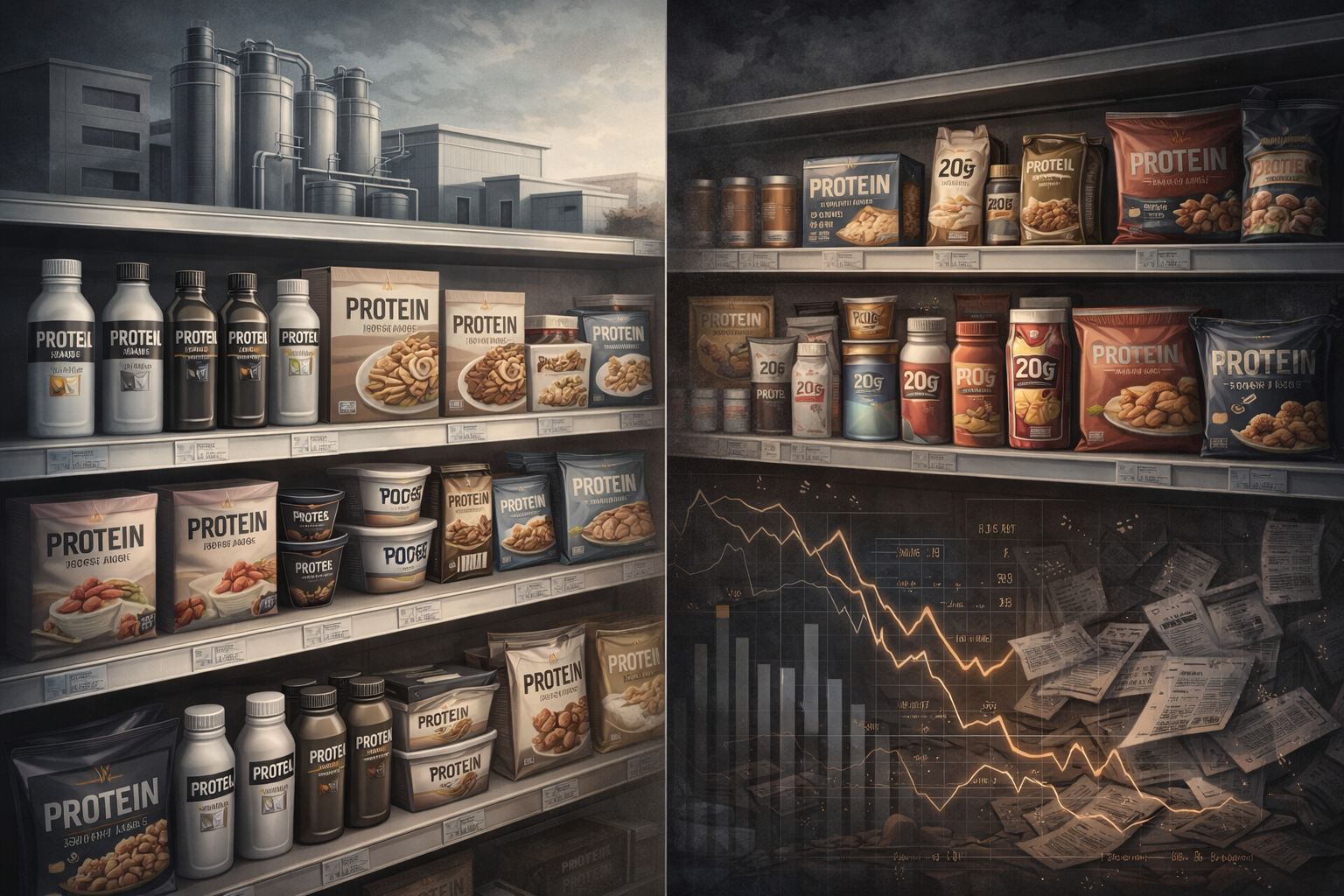
Demand looks real, but it is not entirely pure
The consumer interest behind protein is hard to dismiss. Protein has moved well beyond the gym crowd and into the mainstream. Older consumers are paying more attention to muscle retention and healthy aging. Younger consumers increasingly tie protein to wellness, satiety, and fitness identity. People using GLP-1 drugs are becoming more focused on protein intake because of concerns around muscle preservation. Social media has also amplified the message, turning protein into a daily health signal rather than just a macronutrient.
That said, there is an important contradiction built into the theme. Many consumers are actively trying to increase protein intake even though, in aggregate, a large share of them already consume more than recommended baseline levels. That matters because it suggests the protein boom is not driven purely by nutritional need. A meaningful part of it is also being shaped by perception, health signaling, and marketing.
This does not make the trend false. It makes it more complex. Protein is real as a consumer priority, but the commercial narrative built around it may be larger than the biological need itself. That distinction matters for investors because it separates categories with real utility from categories that are simply wearing the label.
Not every protein category is created equal
From a distance, the protein market looks like one large growth story. Up close, the quality differences are obvious.
The strongest categories tend to be ready-to-drink protein beverages, high-protein dairy products, and meat-based snacks. These segments benefit from a relatively intuitive consumer proposition. The source of the protein feels natural, the use case is easy to understand, and the value proposition is visible in the product itself. A drink built around protein, a yogurt centered on protein, or a meat snack with protein credibility does not need much explanation. These categories have a cleaner logic.
The weaker categories are usually the ones where protein has been added to products that did not originally need it. This is where the “proteinization” wave starts to look more fragile. A cereal, pasta, or conventional packaged snack can gain attention by adding a protein claim, but that does not necessarily solve any deeper category weakness. It may boost relevance temporarily, but it does not automatically create better economics or a more durable moat.
That is the first major dividing line in the space. A protein label by itself does not create a high-quality business. Brand trust, distribution, manufacturing capability, and category fit still matter much more.
Why the biggest winners may not be the pure-play names
One of the more interesting aspects of the protein trend is that the most durable winners may not be the companies with the most obvious protein exposure. In many cases, the stronger beneficiaries are the larger businesses with scale, distribution, and production capacity.
That is because protein is not just a branding opportunity. It is also a supply-chain and margin-management story. Companies that can produce at scale, defend shelf space, and extend trusted brands into adjacent products have a much better chance of turning consumer demand into lasting profit. A large platform can absorb volatility, support capacity investment, and spread marketing costs across a broader portfolio. A smaller or more concentrated company has much less room for error.
This is why some of the larger diversified players may ultimately be more attractive than the obvious pure-play names. When a trend becomes mainstream, scale often matters more than thematic purity. The winners are not always the companies most visibly associated with the trend. Often they are the ones best built to industrialize it.
Why some protein companies still stumble
The protein story can look compelling at the category level while becoming much more difficult at the company level. That is because the economics underneath the trend are not always as attractive as the consumer narrative suggests.
The first problem is input costs. Many premium protein products rely heavily on whey and other specialized ingredients whose cost structure can become volatile. When those inputs rise sharply, gross margin pressure can arrive very quickly. A company can have strong volume growth and still disappoint badly if the underlying cost base moves against it. In protein, revenue momentum and margin stability do not always travel together.
The second problem is private label. This may be one of the most important medium-term risks in the category. As protein becomes more mainstream, the uniqueness of the claim itself declines. Once consumers begin to view high-protein products as a standard grocery choice rather than a premium specialty item, lower-priced private-label offerings become much more threatening. If the perceived quality gap narrows, branded companies can lose pricing power faster than expected.
The third problem is overcrowding. The more products enter the market with similar “high protein” positioning, the less differentiated the claim becomes. At some point, protein stops being a distinct selling point and turns into a generic shelf feature. When that happens, the key question shifts. It is no longer “who sells protein?” It becomes “who can still command a premium in a crowded field?”
That is where many investors get caught. A rising consumer category can still produce disappointing stocks if competition intensifies, costs rise, and valuations were built on the assumption of cleaner economics than the category can actually support.

GLP-1 is helping, but it is not the whole story
GLP-1 drugs have become an important accelerator for the protein narrative, but they should not be treated as a complete explanation.
The logic is straightforward. People using GLP-1 drugs are often more focused on maintaining muscle mass while consuming fewer calories, which naturally increases interest in protein-dense foods, shakes, and nutrition products. That creates a real tailwind for categories built around functional protein intake, especially where convenience matters.
But this tailwind can also be overstated. The user base, while meaningful, is still limited relative to the broader consumer market. Adoption patterns can change. Pricing can change. Side effects and adherence issues can change. Oral alternatives may also reshape usage over time. So while GLP-1 clearly supports the protein theme, it should be understood as an accelerant rather than the foundation of the category.
The broader protein trend would still exist without it. GLP-1 has simply made the story stronger and more investable in the near term.
Where real value is likely to accumulate
If you step back, the public-market opportunity in protein breaks into a few distinct buckets.
The first bucket is the direct-exposure names. These companies give investors the cleanest thematic exposure, but they also carry the highest volatility. When the narrative is strong, they can outperform dramatically. When margins compress or competition intensifies, they can unravel just as quickly. This is where the difference between a good category and a good stock becomes most obvious.
The second bucket is the larger, more diversified companies with strong protein exposure inside a broader portfolio. These names may not offer the same headline-grabbing upside during periods of thematic excitement, but they often present a more durable risk-reward profile. They benefit from the trend without becoming fully dependent on it.
The third bucket is the “maybe” group: companies experimenting with protein extensions in categories where the fit is less proven. These may produce interesting product launches and short-term buzz, but that does not necessarily mean the protein angle will move the larger business in a meaningful way.
The fourth bucket is the over-narrated group: businesses where the protein story has, at times, become larger than the actual financial contribution. This is often where valuation risk becomes greatest. The market starts paying for the concept of exposure rather than the quality of the economics underneath it.
That is why selectivity matters so much in this theme. Protein may be a real growth area, but not all protein exposure deserves the same multiple.
So is this trend lasting, or just well-marketed?
The honest answer is: both.
The trend is not artificial. There are real structural drivers behind it: aging consumers, greater attention to muscle health, the spread of fitness culture, the rise of GLP-1 usage, and broader health awareness. Protein is not being pulled into the mainstream from nowhere. It has a legitimate consumer foundation.
But the market is also clearly going through a phase of over-extension. Once a trend becomes commercially powerful, companies try to attach it to everything. That is exactly what is happening now. Some protein products are solving genuine consumer needs. Others are simply wrapping ordinary products in a more fashionable nutritional claim.
That is why the distinction between “protein demand” and “protein branding” matters so much. The former can be durable. The latter is often temporary.
Final synthesis: the protein theme is real, but the investment case has to be more selective
The most important lesson here is that protein is not just a passing fad, but neither is every protein-branded product a durable growth engine.
The consumer shift is real. Protein has become a mainstream health and wellness priority, and the businesses best positioned around natural category fit, strong brands, manufacturing scale, and disciplined distribution can benefit meaningfully from that shift. But the market is already far enough into the trend that investors need to be much more selective than the narrative might suggest.
The strongest winners are unlikely to be the companies that simply write “high protein” most aggressively on the packaging. They are more likely to be the companies that can defend premium positioning, manage volatile inputs, withstand private-label pressure, and use scale to turn a powerful consumer theme into lasting economic value.
That is the real difference between a trend and an investment thesis. Protein may be both. But only in the right hands.


