
Markets never hesitate on first reactions. When the Strait of Hormuz was effectively closed on February 28, 2026, Brent crude moved above $100 within a few sessions; gas prices surged 76% in a single week; tanker charter rates nearly doubled in the same period. Screens turned red, "oil crisis" headlines flooded the market, and the prevailing consensus settled into a familiar frame: "stays elevated for a while, then returns to normal."
That is precisely where the real story begins.
What markets see first is the oil price. But a large share of the economic damage from this shock is not coming directly from the crude price — it is coming from freight, insurance, LNG infrastructure, and the secondary effects of all three, reverberating across regions in dramatically different ways. And some of those effects will reach the real economy on a timeline that runs well ahead of what market pricing currently reflects. The central question is this: Is the Hormuz shock a temporary energy price story, or does it represent a broader macro regime break — transmitted through energy, LNG, freight, inflation, and regional growth channels simultaneously?
The answer is much closer to the latter. But understanding why requires unpacking the transmission mechanism layer by layer.
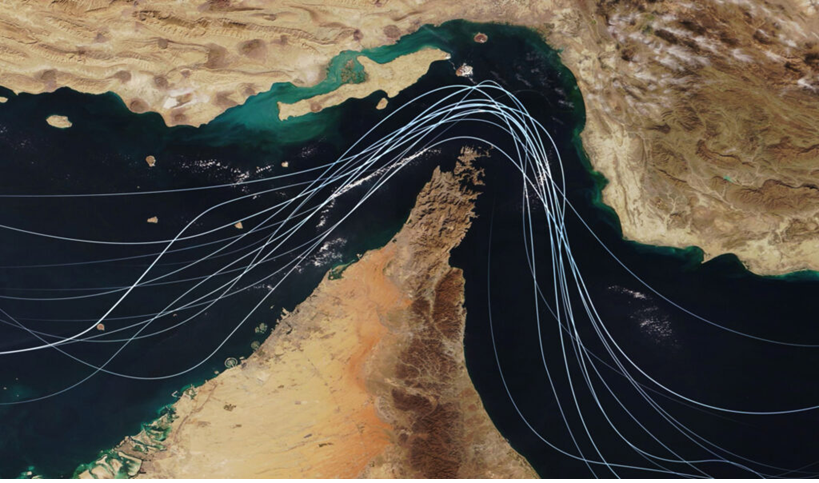
The Transmission Chain: From Price Shock to Economic Damage
The economic effect of an energy supply shock is never equal to the movement in spot prices. Between the two lies a long transmission chain — and each link in that chain operates on a different lag, a different geographic distribution, and a different policy dimension.
The chain that began with the Hormuz closure runs as follows: once the strait was effectively blockaded, between 11 and 18 million barrels per day of crude oil and a substantial portion of Qatar's LNG output were removed from the market. Brent moved from $65 to the $110-126 range; TTF gas surged 76% to €46.52/MWh. That was round one — instantaneous market pricing, fast and unambiguous.
Round two is the link that receives far less attention but carries much of the actual economic weight: freight and insurance. VLCC charter rates rose 94% in a single week to approximately $770,000 per day. War risk insurance climbed from 0.25% to over 1% of hull value; the war risk premium on a single VLCC voyage jumped from $250,000 to $2-3 million. Maersk, MSC, CMA CGM, and Hapag-Lloyd — the four largest container carriers in the world — suspended Hormuz transits and rerouted via the Cape of Good Hope. That rerouting adds 3,500-4,000 nautical miles and 10-14 days to Asia-Europe voyages; it adds $1.1-1.3 million in additional fuel cost per Panamax voyage. The total estimated incremental cost at the global level: $8 billion per month.
Round three is the pass-through to producer prices (PPI); round four to consumer prices (CPI); round five is the secondary pass-through into core inflation. Reaching that last link has historically taken 9-11 months. This is not a minor technical footnote — it means the consequences of decisions central banks make today will not be fully visible for close to a year, and that what markets have priced today captures the economic damage only partially.
The most powerful link in the chain is not the oil price itself — it is the fact that the energy price shock and the freight/insurance cost shock were triggered simultaneously. In historical crises, these two channels typically moved at different speeds. In 2026, both were activated at once. UNCTAD projects global merchandise trade growth to fall from approximately 4.7% in 2025 to 1.5-2.5% in 2026. That outcome is not simply a function of oil prices — it reflects logistics costs spreading across all trade flows.
Oil and LNG Are Not the Same Shock
This distinction deserves its own section because a significant portion of the market is pricing them as a single variable. The mechanisms, persistence profiles, and most-affected geographies are sharply different.
On the crude oil side, the shock is severe but potentially more reversible. Brent moved from $65 to approximately $113 by late March 2026. Once Hormuz reopens, the IEA's historic 400-million-barrel reserve release activates, OPEC+ production increases reach the market, and demand destruction pressure pulls the spot price back. Goldman Sachs maintains a Q4 2026 Brent forecast of $71/barrel — a scenario of relatively rapid normalization on the oil side.
The LNG side tells a fundamentally different story. The March 18, 2026 attack on the Ras Laffan facility knocked out 17% of Qatar's LNG production capacity. The damage is physical and structural — repair is estimated to require 2 to 3 years. This means that even if the war ends, LNG prices will remain elevated on a high structural platform. Goldman Sachs raised its Q2 2026 TTF forecast from €45 to €63/MWh. According to Rystad Energy calculations, four weeks of Qatari production outage wiped 28% of all expected global LNG supply growth for 2026 — removing approximately 11.2 million tonnes from the market.
The difference between the two answers the question: what distinguishes this shock from an ordinary temporary price event? The answer is the structural friction created by Ras Laffan's physical damage. An oil price can fall on a ceasefire. LNG infrastructure capacity cannot be repaired by a ceasefire. Long-term contracts provide a partial buffer — Japan's largest LNG purchases are on long-term contracts and are not fully exposed to the spot market in the short run. But buyers without long-term contract structures, particularly in Southeast Asia, are facing sharply higher prices today.
For economies where gas-fired power generation is dominant, the LNG shock carries an additional dimension: electricity costs rise, which increases industrial operating costs and flows directly into household energy bills. Japan, South Korea, and parts of Europe are facing dual pressure through this channel: both crude oil and gas-driven cost increases operating simultaneously.
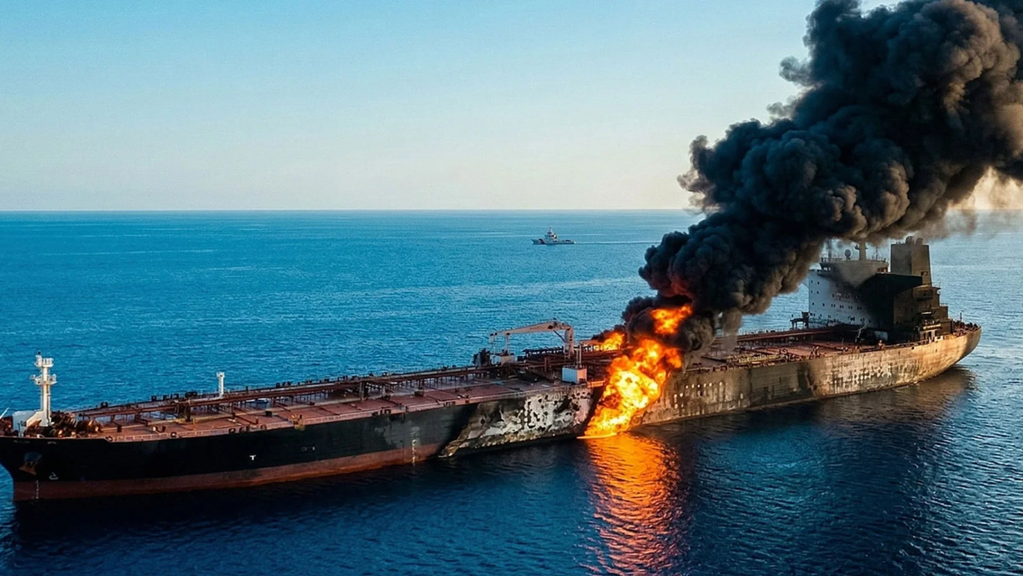
The Second Inflation Wave the Market Is Missing: Freight and Insurance
News flow focuses on oil prices. Institutional notes are being rewritten around oil and LNG forecasts. Market debate is largely anchored to the energy sector. But a material portion of the real economic damage is coming not from the crude price itself — it is coming from repriced logistics.
The forced rerouting to the Cape of Good Hope is not simply adding fuel costs. Delivery times are lengthening; supply chain buffers are being depleted; port congestion is building; just-in-time production models are coming under strain. And these effects are spreading across all trade flows — including goods that have nothing to do with energy. Textiles, electronics, automotive components, pharmaceutical raw materials, agricultural products — the cost and timeline of every cargo route from Asia to Europe has changed.
Looking at container freight, the Asia-Europe route repriced at $400-600/TEU in additional costs. That number appears small in isolation, but when applied to millions of TEUs annually and the full retail chain passing those costs to the next link, consumer price pass-through becomes unavoidable. The same mechanism is running through chemical raw materials: polypropylene is up 24%, aluminium up 10%. 84% of Middle Eastern polyethylene capacity is Hormuz-dependent — this channel is hitting Asia's chemicals and plastics industries directly.
On war risk insurance, the structural problem is harder to resolve. A $250 million vessel cannot be commercially dispatched into an active war zone without insurance coverage. This creates a de facto blockade effect; commercial actors attempting to transit Hormuz face substantial cost barriers. And insurance markets, as the Red Sea crisis of 2024-2025 demonstrated, price risk premiums with persistent memory — normalization takes months even after hostilities subside. For Hormuz, this cycle may run longer, because a precedent has been established: the world's most critical commercial chokepoint has now been used as a military target. That information is being permanently embedded in risk pricing.
Regional Impact Map: Not Everyone Is Affected the Same Way
Understanding the Hormuz shock means resisting global generalizations and making regional distinctions. Oil prices rising appears to affect everyone equally — but the scale, speed, and durability of that impact vary dramatically from one region to the next.
Asia: Dual-Channel, Dual Pressure
84% of oil and 83% of LNG flowing through Hormuz was destined for Asian markets. That single data point explains why Asia is both the first and hardest-hit region. But even within Asia, the differentiation is significant.
Japan covers approximately 60% of its total energy needs through crude oil and LNG imports. LPG dependence is also high. Rising oil prices are directly compressing trade terms, while a persistently weak yen amplifies the energy bill burden. To understand the BOJ's dilemma, this dynamic is essential: Japan spent decades fighting deflation; it now faces an inflation problem while simultaneously confronting growth deceleration risk. The BOJ held rates at 0.75% ahead of its April 2026 meeting while two members dissented in favor of earlier hikes. The IMF has recommended that the BOJ continue its hiking cycle despite energy pressure. This crisis is building the foundation for a slow but durable cost inflation syndrome in Japan.
South Korea sourced 70% of its crude oil through Hormuz. Its energy-intensive semiconductor and steel sectors are directly in the line of fire — and a country controlling a significant share of global semiconductor output being this energy-vulnerable carries implications for global technology supply chains. The Bank of Korea was forced to suspend the easing cycle it had recently begun. Industrial competitiveness — particularly in steel and petrochemicals — is deteriorating.
China is relatively better positioned but far from immune. China holds Asia's strongest energy diversification buffer: coal, nuclear, and renewables partially offset import dependence. The discounted Russian crude channel is active. PBOC selective easing remains on the table. But China's petrochemical sector and energy-intensive heavy industry cannot escape import cost pressure. And the rerouting of export channels to the Cape is extending delivery times and raising logistics costs for goods originating in China.
Southeast Asia is the most exposed sub-region in this crisis. 56% of its crude oil comes from the Middle East; in many countries, strategic reserves cover fewer than 15-20 days. Indonesia holds roughly 20 days of reserves; Vietnam sources over 80% of its crude from the Gulf; the Philippines responded with a four-day workweek as an emergency measure; office-hours restrictions began appearing in Bangkok and Jakarta. In most of these countries, fuel and food prices represent a disproportionately large share of consumer budgets — meaning this is both a social and political pressure point. Central banks face rate hike pressure at exactly the moment when growth is already fragile.
Europe: Better Prepared Than 2022, But Newly Vulnerable
Europe drew lessons from the 2022 energy crisis. Gas storage has been managed more carefully, LNG infrastructure has been diversified, energy conservation habits have taken hold. TTF is currently around €60/MWh — incomparable to the €340/MWh reached in August 2022.
That said, Europe's Qatar LNG dependence is creating renewed vulnerability. Belgium, France, and Spain — the leading Qatari LNG importers — face sharply higher spot market costs. The structural damage at Ras Laffan makes this dynamic more consequential.
The ECB held rates at its March 2026 meeting but signaled a hike — the first such signal since November 2022. Under the ECB's own scenario analysis, the adverse scenario for 2026 HICP inflation runs 1.8 percentage points above the baseline. Germany's joint economic forecast model projects 2026 inflation at 2.8% and 2027 at 2.9%. For the UK, end-of-year projections above 4% are on the table.
On the industrial side, Germany is the most exposed. Chemicals, automotive, and heavy industry sectors are facing energy cost pressure. Approximately 30% of jet fuel arriving in Europe transits Hormuz — pointing toward ticket price pressure and potential capacity constraints on some Europe-Asia routes.
India: The Most Dangerous Macro Combination
India occupies a distinctive position in this crisis. Energy import dependence, a weakening currency, and a large consumer base — combined, these three factors produce the macro mix most exposed to stagflation.
India sources 40% of its crude through Hormuz. It is the world's second-largest LPG importer. Every $10/barrel oil increase widens the current account deficit by approximately 0.4-0.5% of GDP; at $100/barrel, the current account approaches 3% of GDP. The scenario of USD/INR moving above 95 has gained credibility. Under full cost pass-through conditions, CPI could rise 25-50 basis points and GDP growth could fall by 0.5 percentage points.
India does have one advantage: the US temporarily eased sanctions on Indian crude imports from Russia, providing near-term breathing room as Russian crude continues to offer a cheaper alternative. But as UBS analysis has demonstrated, India can absorb oil at $80/barrel; above $100, the RBI faces a growth-inflation dilemma that demands a fast policy response.
Russia: Indirect Beneficiary, But Not Unconstrained
Russia is the unexpected beneficiary of this crisis. The Brent rally pushed Ural crude from $40 to $72/barrel. Fossil fuel export revenue for March 1-15, 2026 came in at €7.7 billion — with the daily run rate rising from €472 million to €513 million. Exports to India climbed to 1.8 million barrels per day; the Ural-Brent discount has been narrowing.
But this "gain" is not absolute. Russia continues operating under sanctions; shadow fleet capacity is limited; it cannot capture the full benefit of every price increase. According to Carnegie Endowment analysis, the Hormuz closure is strengthening Russia's "indispensable" positioning in global oil markets — but converting that into a durable systematic advantage remains constrained by the sanctions environment and infrastructure limitations. Geopolitically, the "precedent has been set" argument also unsettles Russia: the weaponization of Hormuz creates a global template for energy security disruption that cuts in multiple directions.
United States: "Energy Independence" Meets Its Limits
"Energy independence" has become an indispensable fixture of American political discourse. The 2026 Hormuz shock is drawing clear lines around that narrative's limits.
Yes, the US is a net energy exporter. Shale production remains robust. But crude oil is priced globally: the light-medium crude that US refineries process is not a perfect substitute for Arab or Gulf grades. Refineries require specific quality and density inputs. As a result, WTI moved to $114; retail gasoline climbed to $3.79/gallon, a 29% increase over a single month.
This creates a direct "tax" effect on consumer spending — fuel, transportation, and heating expenditures are rising while purchasing power in other spending categories erodes. The Fed sits in an interesting dilemma: there is a strong institutional bias against responding to short-term energy shocks with rate changes, but if the shock becomes durable and core inflation pass-through materializes, that calculus changes. The "wait and see" posture is understandable — but when the end of the transmission chain is reached, the Fed's options may be narrower than they appear today.
The winners are visible: shale producers, LNG exporters, energy services companies. The losers are quieter but broader: airlines, retail, agriculture, and lower-income households.
Canada: Relative Advantage, Structural Constraint
Canada, the world's fourth-largest oil producer, is relatively well positioned. WCS crude moved from $50 to $85/barrel; Alberta and Ottawa budget revenues are climbing; the Canadian dollar maintains its positive correlation with oil prices.
But meaningful short-term production increases are close to impossible. Trans Mountain — Canada's only international pipeline — is running at full capacity. A 140,000 barrel/day increase coordinated through the IEA is available, but it comes from previously planned oil sands expansion, not surge capacity. TD Economics argues that Canada's lower domestic consumer demand and CAD appreciation provide a relative buffer against core inflation pressure — but that buffer has limits under high-risk scenarios.
Latin America: Two Very Different Stories
Latin America offers the most fragmented regional picture of this crisis. Brazil, producing 4 million barrels per day, has limited short-term capacity to increase supply but benefits from higher oil prices through Petrobras. Guyana, as a rapidly growing producer, is gaining strategic value as new crude flows are redirected toward Asia. Colombia, Ecuador, and Trinidad are also relatively advantaged as exporters.
But the Caribbean and Central America present an entirely different story. These countries are largely dependent on spot markets — Jamaica, the Dominican Republic, and Nicaragua are fully exposed to the price shock with no buffer, no alternative supply, and insufficient reserves. Fertilizer and food cost increases are creating direct income erosion effects across these populations.
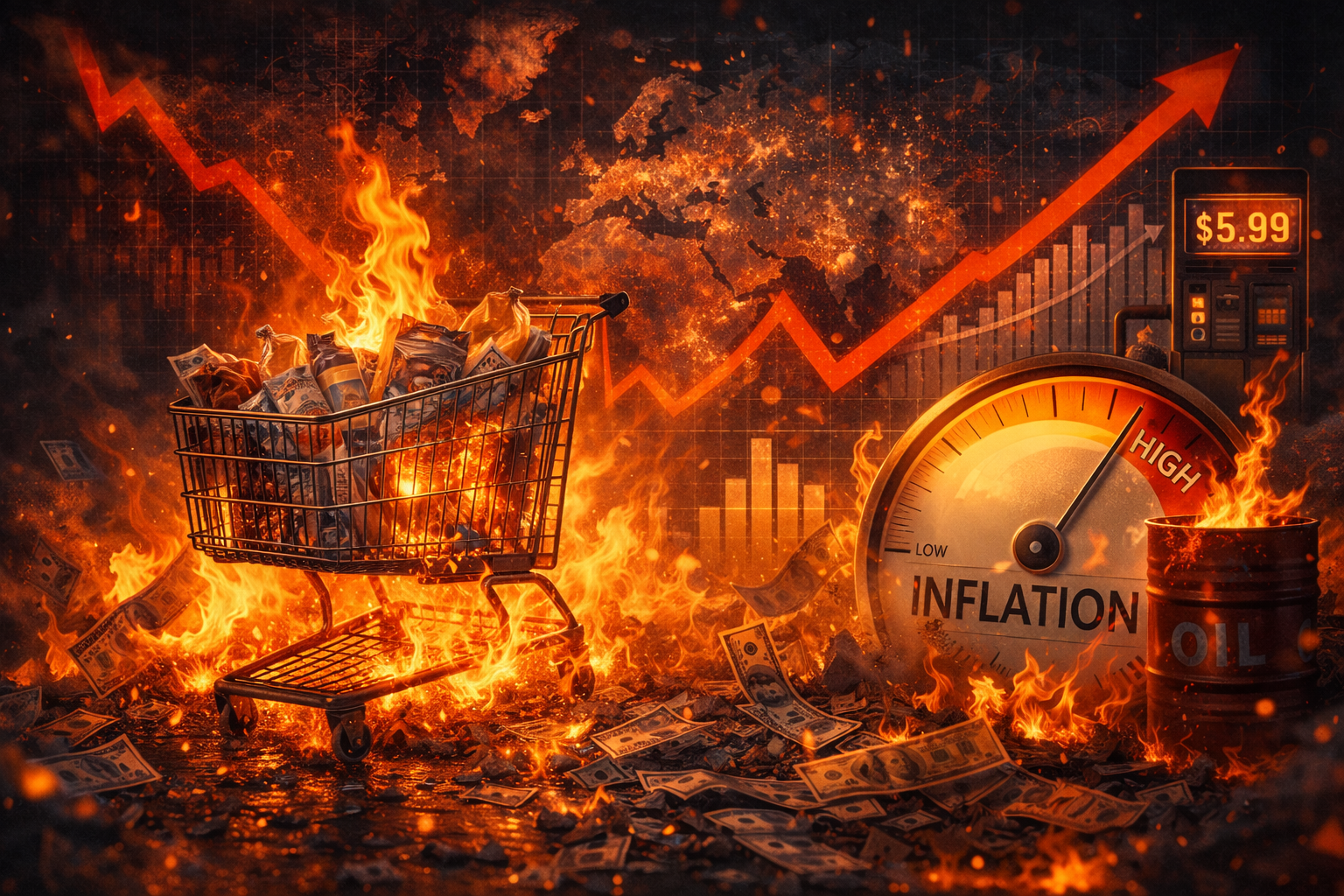
Inflation: How Fast Does the Market See It? How Long Before the Economy Feels It?
Spot oil and gas prices repriced instantly. But the propagation of inflation across the broader economy moves on a very different clock.
In the 0-4 week window: crude oil, gas, and tanker market pricing. This is fast, dramatic, and visible. It is what investors are tracking.
In the 1-3 month window: energy bills rise, producer price indices (PPI) come under pressure, Cape rerouting logistics costs begin filtering into long-term commercial contracts. Japan, South Korea, and Southeast Asia are already absorbing this round of effects. Q2 2026 inflation forecasts for Germany and the UK have been revised upward.
In the 3-6 month window: CPI effects become explicit. Germany's joint economic forecast model projects 2026 inflation at 2.8%. The UK is looking at above 4% by year-end. India faces an earlier pass-through — because energy costs carry a higher weight in CPI composition and in household budgets.
What arrives in the 6-12 month window is what most market participants have not yet fully priced: the secondary pass-through into core inflation. Historical data shows this lag runs 9-11 months. Full freight cost pass-through takes 6-9 months. This means the consequences of today's central bank decisions will not be fully visible until early 2027. That is what makes the policy uncertainty so acute — and the "how tight should we stay" question so difficult to calibrate.
The IMF's baseline rule: a 10% increase in crude oil adds an average 40 basis points to global inflation and subtracts 0.1-0.2 percentage points from global growth. Brent rose 59-70%. Running that arithmetic makes clear how large a core inflation risk is now accumulating.
ECB President Lagarde is emphasizing "unconditional" commitment to the 2% target. But she also knows: if tightening is undermining growth at the same time that inflation is elevated — if the economy enters stagflation — that is among the most expensive policy terrains to navigate. This tension is real for both the ECB and the BOJ; for the Fed, it is somewhat more distant but firmly on the horizon.
Sector Winners and Losers: The Mechanism Matters
What the market knows: energy equities rally, airlines sell off. But constructing the right sector positioning without understanding the mechanism is unreliable.
Energy producers — US shale, Canadian oil sands, Brazil's Petrobras, Russia's Lukoil/Rosneft — are the most direct beneficiaries of the price increase. The mechanism is simple: production costs are fixed, sale prices have risen. But the advantage is not uniform across companies: Russian producers under sanctions are forced to sell at discounted prices, while Canadian producers are constrained by pipeline capacity.
LNG carriers are seeing short-term gains in the spot charter market. But operating near a war zone simultaneously drives up insurance costs and operational risk — making "mixed" a more accurate category than "winner."
Tanker companies captured instant gains from the VLCC charter surge. But entering active war zones is becoming commercially impossible; vessels outside insurance coverage cannot move. The business model is under its own structural stress.
Refineries — particularly those operating at Asia-Europe hub locations such as Singapore and Rotterdam — are benefiting from cracking margins. Refined product prices are rising faster than crude inputs; refinery product sales revenues are outrunning cost increases. Goldman Sachs continues to hold Asian refinery margins elevated.
Airlines are the most direct institutional casualty. Approximately 30% of jet fuel arriving in Europe transits Hormuz. Fuel typically represents 20-30% of airline operating costs; that share has moved sharply higher. Even as ticket prices are raised, passenger volumes are falling; long-haul Asia-Europe routes are where the damage concentrates.
Chemicals and plastics face multi-channel pressure. Naphtha feedstock costs are rising; 84% of Middle Eastern polyethylene capacity — Hormuz-dependent — is offline; and freight costs are passing through to final product prices. Polypropylene up 24% and aluminium up 10% are already feeding into automotive, electronics, and consumer goods production cost increases.
Automotive is experiencing multi-directional pressure. Japanese and Korean manufacturers face simultaneous input cost pressure and semiconductor supply chain stress in energy-intensive production processes. For Germany's auto sector, energy and chemical input costs are already elevated while the demand side weakens as consumer purchasing power erodes.
Heavy industry and steel face margin compression from energy cost increases. Japan, South Korea, India, and Germany's large steel and non-ferrous metal producers are in the direct line of fire. Coking coal and natural gas prices rising simultaneously creates a double-cost squeeze.
Food and agriculture is the impact channel most often overlooked — and one of the most consequential. Natural gas-based fertilizer prices are rising; agricultural production costs are climbing; agricultural commodity freight is becoming more expensive. For agriculture-dependent economies in Southeast Asia and Latin America, this secondary channel can cause as much damage as the primary energy shock.
Retail faces a delayed but durable squeeze. Full freight cost pass-through to consumer prices takes 6-9 months. But the delay does not mean the risk has passed — it means that Q3 2026 and beyond carry the risk of retail price increases colliding with weakening consumer confidence.
Renewable energy is the long-term structural winner. Every energy crisis generates a compelling argument for clean energy transition investment. Solar, wind, and nuclear are gaining weight in energy security strategies across South Korea, Japan, and Europe. Near-term impact on the crisis itself is minimal — but the energy independence debate will shape investment agendas for years to come.
Gas-fired power generation is under direct pressure. TTF rising 76% sharply increases the variable operating costs of gas power plants. In gas-dominant electricity markets — Japan, the UK, the Netherlands, several Southeast Asian countries — electricity bills are rising for both households and industry.
Institutional Frameworks: Who Is Looking at What?
IEA, IMF, ECB, BOJ, Goldman Sachs — all of them are looking at the same event from different vantage points. Reading these differences as news items is less useful than deploying them as analytical frameworks.
The IEA characterizes the supply disruption as "the largest in history" and announces a 400-million-barrel reserve release. This is real, not symbolic — but the release capacity relative to the supply gap is limited. That figure covers roughly two weeks of typical Hormuz throughput. The IEA is providing a "bridge," not a structural resolution. That framing explains why the announcement only briefly suppressed prices.
The IMF says: a 10% oil price increase adds +40 basis points to global inflation. 2026 growth will be revised down. Asia is the most vulnerable region. Emerging markets may need external assistance. The framework is reasonable but not symmetric — the IMF model's weakest point is that it does not fully capture LNG infrastructure damage and freight cost persistence.
The ECB's position carries an interesting tension. Lagarde is stressing "unconditional" commitment to 2%; simultaneously, she is characterizing the shock as "more manageable" than 2022. When Ras Laffan's damage persistence fully flows into ECB projections — likely over the next one or two Council meetings — that characterization will be tested.
Goldman Sachs is maintaining a Q4 2026 Brent forecast of $71/barrel, weighting the normalization scenario. JPMorgan is speaking from a very different framework: if the closure continues, Brent could move toward $150. That two institutions are pricing the same event this differently is itself a reflection of the true scale of uncertainty. The EIA revised its 2026 Brent average to $78.84 — based on assumptions of temporary closure and partial normalization.
The common denominator across all institutional views: the supply-side surprise remains the most important swing variable. The duration of the Hormuz closure and the depth of Qatar's LNG infrastructure damage constitute a meta-risk sitting above all numerical forecasts.
Counter-Narratives: Where This Story Should Not Be Read Unidirectionally
Not every crisis analysis needs to trend toward alarmism. Several strong counter-arguments exist for this shock as well.
First, the demand destruction mechanism. When oil enters the $120-130 range, demand destruction historically accelerates: industrial usage drops, flight counts fall, consumers reduce fuel consumption. This pressure pulls prices lower. Goldman Sachs's Q4 $71 forecast is substantially driven by this mechanism.
Second, IEA reserve coordination. The 400-million-barrel release is real — but its capacity to close the supply gap is limited. It does, however, send the market a signal that coordinated institutional response exists, which suppresses panic pricing.
Third, how fast does price fall if the strait reopens? The oil side responds quite quickly. A ceasefire or agreement announcement can produce $10-20/barrel price declines within hours. The LNG side cannot run this mechanism — Ras Laffan was physically damaged, and a ceasefire does not repair that damage.
Fourth, how long do freight and insurance premiums stay elevated post-war? The Red Sea crisis is instructive: even as the Houthi threat diminished, freight normalization took months. For Hormuz, the timeline may be longer — because a precedent was established. This means that even after the war ends, logistics costs are unlikely to snap back quickly.
Fifth, are energy exporters really net winners? Yes, there is a price advantage. But several friction mechanisms are running simultaneously: Canada's pipeline constraint, Russia's sanctions, Brazil's fertilizer costs, US domestic inflation pressure. Characterizing the net effect as "purely positive" is an oversimplification.
And the largest question: is this the beginning of a 1970s-style stagflation cycle? The parallels are strong — a major supply shock, inflation already elevated, tight labor markets. The differences also exist: energy efficiency, source diversification, central bank independence, the weight of the digital economy. The definitive answer depends heavily on how long the Hormuz closure persists. A shock lasting weeks and one lasting months produce very different economic trajectories.
Final Synthesis: Three Questions, One Answer
Which part of this shock is worst — oil, LNG, or logistics? In the short run: oil — instantaneous, visible, fully priced by the market. In the medium run: LNG — structurally persistent due to Ras Laffan's physical damage, capable of holding gas markets elevated for years, not yet fully priced. In the long run: logistics — the persistence of freight cost repricing and the "memory" of insurance risk premiums creates an inflation channel that operates independently of the oil price. The fact that all three are running simultaneously is what makes 2026 unusual.
Where are the genuinely vulnerable regions? Japan and South Korea — dual-channel pressure from both oil and LNG. Southeast Asia — insufficient reserves, high spot market dependency, weak policy buffers. India — the combination of energy dependence, currency vulnerability, and inflationary exposure. The energy-intensive industrial base of the Eurozone — with Germany and the UK carrying the sharpest growth-inflation tension.
What is the market pricing today, and what has it not yet fully priced? The market has priced the oil move. It has priced the energy equity re-rating. It has largely priced the currency moves. But it has not yet fully priced the second-order impact of persistent LNG infrastructure damage extending into 2027. It has not priced the delayed pass-through of freight costs into consumer prices. It has not priced the secondary pressure on core inflation arriving 6-12 months from now. And perhaps most importantly, it has not fully calculated the effect on growth from the decisions central banks will make once they see all of this arithmetic clearly.
Markets see the oil price first. But the real economic damage from this shock — in inflation, in growth, in corporate margins, and in consumer confidence — will accumulate more slowly and through very different routes than the initial price signal suggests. For the investor who knows which channels to watch, that lag is not a risk. It is the opportunity itself.


